A few days ago I went through what a buyer needs to think about and do after they have successfully placed a contract on the home. To read that post click here. Today I’d like to talk about the sellers side of the real estate transaction.
Finding a buyer and agreeing to an acceptable price and terms with a buyer is one of the high points of a real estate transaction. No more daily showings, no more uncertainty, making plans for the future, it’s exciting stuff. But then comes the realization that you are only part way to the finish line. There is still work to be done. This is a checklist of items that the seller is responsible for between contract and closing.
Order Title Commitment – In Colorado the seller is responsible to providing the buyer a title insurance policy in conjunction with a real estate purchase. The first step of this process is ordering the title commitment. The listing agent usually handles this for the seller. This is also a great time to provide to the title officer the information on your existing loans which will need to be paid off at the closing.
Homeowners Association Documents – As per the Colorado approved real estate contract the seller will provide the buyer a copy of the relevant HOA documents. This shall include bylaws, rules and regulations, financial documents, minutes from the most recent meetings. Again, this is something that the listing agent usually tries to supply (at least I do) but sometimes the information is embedded in a members only website and the Realtor might need help with this.
Gather Paperwork – The buyer will want to have any relevant documentation regarding the home. In conjunction with the disclosure requirements the seller must supply the buyer any prior inspections or reports that give insight to the condition of the home. This would also be a good time to gather any manuals and warranties and set them aside before your packing gets into full gear.
Prepare for Inspection – Just because most of the showing activity has subsided it doesn’t mean that you are off the hook for keeping the home looking good. I would argue that the inspection is your most important showing and the house should be prepared as well as possible. In addition to the general cleanliness here are a few tips to help the inspection. Replace the furnace filter and clean the humidifier filter if you have one. Move boxes and or furniture away from access points for plumbing, heating and electrical. It is common that a buyer will perform a radon test and the protocol for a radon test is that the house will be closed up for 12 hours prior to closing as well as 48 hours throughout the test. However, it is a really good idea to “air out” the lowest level of the home prior to the closed house conditions.
Make Your Arrangements – Start making arrangements for moving, storage, packing and cleaning. Consult with your Realtor so that you are sure that you understand the timing of when you need to be out and cleaned. After the inspection it is also a good idea to contact the utility companies to let them know about an upcoming transfer in service. Once the deal is rock solid, put in your change of address request to the postal service.
Inspection Items – Once the inspection has been done and the agreements surrounding the inspection has been made, some work will need to be done. My advice here is to get the work done as soon as possible, don’t cut corners and follow the letter of the agreement to a “t”. The listing agent is there to help you get this work done if you need help.
Clean and Closing – The days surrounding closing will be busy days. You will need to pack, clean and supervise work maybe at two locations. My advice regarding how you leave the home is based on two things. Look at the contract and make sure you are doing the minimum required and then consult the Golden Rule. How would you really like a home to be left for you? When the house is really left in good shape and the buyers feel that they are being treated well, the closing is much easier for all involved.
This list is based on my experience and is from the sellers perspective for a sale in Colorado. If you hire a good listing agent, many of these items will happen seamlessly and you will be left to focus on getting your stuff packed and ready to go. I have been a Realtor based in Boulder Colorado since 1991 and I love doing those small things that make it easier for you. When you are ready to list, give me a call – Neil Kearney 303-818-4055
There are many tactical ideas about real estate negotiation but in my opinion not enough is said about the emotional relationship between a buyer, a seller and an agent. Buyers and sellers don’t often meet in person. This can be a very good thing in many ways because the agents take the direct confrontation out of the process. But the downside of this lack of interaction is that buyers and sellers don’t get a chance to make a personal connection. They don’t get a chance to like each other. Their first interaction is the offer for purchase and this can be a very explosive introduction. “Hello Mr. Seller, nice to meet you. You don’t know me but I like your house but I think you are stupid to ask that much. I only think your house is worth $xxx. Oh, and by the way I want to keep your refrigerator, your window coverings and your grandma’s chandelier.” This usually doesn’t inspire an invitation to dinner.
Stephen Covey’s idea of an emotional bank account in “The 7 Habits of Highly Effective People” can be easily translated to the parties in a real estate transaction. Watch the video to see what a buyer, seller and agent can do to make friends with the other sides of the transaction. In doing so, negotiations will go much more smoothly and buyers and sellers won’t mind sitting together at the closing table (this by the way is getting less common).
Advice for Home Buyers:
Don’t make an unreasonably low offer.
Don’t ask for personal items which have been excluded from the sale.
Don’t be unreasonable and uncaring toward the seller.
Do write a personal letter so that the sellers can get to know you as a person (family).
Do compliment them on their home.
The goal is for the seller to want you to live in their home.
Advice for Home Sellers:
Have the house in tip top showing condition.
Fill out all disclosures accurately and thoroughly. Don’t try to gloss over the details. Giving more detail will earn the Buyers trust and respect.
Respond to offers quickly.
Keep the communication lines open.
Advice for Realtors:
Treat the other Realtor with respect, courtesy and go in with a win-win attitude.
Remember that you are not the one who is buying or selling. So don’t make decisions for your client. Lay out the options and let them decide.
In order to sell a house in today’s real estate market a house must make a compelling case to the market. Some things like neighborhood and location within the neighborhood you can’t control. But set those aside and you are left with two key variables that are controllable and important to the sale.
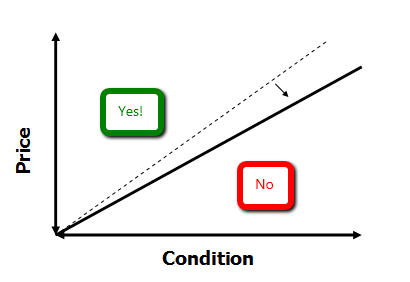
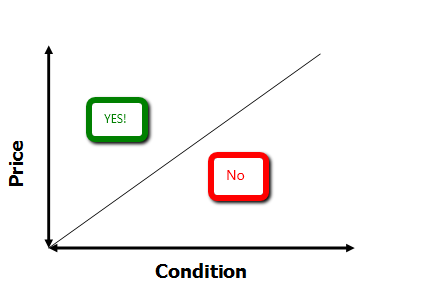
What I’d like to talk about today is being competitive in the market. The main variables a seller has control over is the price they ask for their home and condition and/or upgrades of the home. I have represented these two variables on an axis below so that I show you what I’m thinking. Basically, if your home is in great condition (and I mean exceptional) you can ask a high price compared to similar homes on the market. If your home is in poor shape you have to ask a lower price. This is not rocket science but it gets trickier when a house is somewhere between the extremes. It is in okay condition and has a middle of the road price. Looking at the chart below you can see the line running at 45 degrees. Think of this as the success line. Every house that fits above the line (price vs. condition) will most likely end up in a successful sale. Every home below the line will wallow until the price or the condition changes enough to get it above the line.
Right now the market is fairly slow. There are fewer buyers out there. This means that competition for sellers is tough. In order to be compelling to the small pool of buyers they have to bring a more compelling product to the market. This means that the line has shifted, sellers have to either improve their home to sell it for the same price or reduce their price to make it work.
Knowing where you are is the tricky part. I help my clients by giving good feedback and keeping them abreast of the market as it changes. The information you used to list your house is no longer valid. Get it priced right and have your house show the best it can. If you can’t afford to make improvements up front, lower your price. It’s simple economics.
You have probably seen the attached picture before – is it a picture of a young women or an old women? The answer is it depends on how you are looking at it. How you perceive it.
One definition of reality is: “all of your experiences that determine how things appear to you”. I agree with this on many levels – I believe you make your own reality and what you know and believe as well as your past experiences effect what is “real” for you. A slum dweller in India has a much different reality than a socialite living in Beverly Hills.
The key word in the definition above is experiences. I submit that this definition is not as true as it once was. Don’t worry, I will tie in to real estate in a moment.
In the past (B.C. through the 19th century), reality was based on what one actually experienced. All inputs to opinion were very localized. For example, when there was a famine, chances were that you were hungry. Perceived reality equaled actual reality. There were no outside forces to sway your perception.
During the last century, technology in all of its forms have provided us a wider set of inputs. I guess this is called globalization. We have access to and know more about more subjects. Where we used to just be concerned with our local experience, we now are fed data on an ever-broadening spectrum of subjects. Google (verb) whatever subject you can imagine and have instant access to other’s research and opinion’s. It is no longer our own experiences that form our perceived reality it is the experiences and knowledge of others.
My point is that our perceived reality may not always equal our actual reality due to the influence of non-localized information. I run into people all the time who can’t believe the sorry state of our real estate market. The problem is that they have no actual experience with the market, their perceptions are based on outside information. When people come in from out-of-town, (or locals who have not been paying attention to the trends) they assume that values have dropped at least 20%. When in fact they have remained relatively stable over the past 5 years. They come from that paradigm when they submit very low offers. It is easy for sellers to realize that these low ball offers do not fit with the market.
Right now, the media has plenty of negative news to report. There is blood in the water and the sharks are in a frenzy. Foreclosure’s in CA, value loss in Michigan, empty buildings in Florida, etc. Bad news all around, a fact. The problem is that people take that news and equate that news to all other areas. The message is that the market is bad, the conclusion is that the market is bad everywhere.
I get asked all the time what a reasonable offer would be. My answer depends upon many factors but hard data also helps bring a good perspective to the negotiations. Over the last year in Boulder County, real estate transactions have had the following average negotiation percentages in each price range:
$0 – $250k 3.15% (1,307)
$250 – $500k 2.95% (1,550)
$500 – $750k 3.99% (498)
$750 – $1 MM 5.24% (141)
$1 – 1.25MM 8.2% (58)
$1.25 – $1.5MM 8.35% (35)
$1.5 – $2MM 9.9% (22)
>$2MM 8.65% (23)
Numbers in parenthesis represent the number of sales in that price range.
Perception does not always equal reality. While the market in Boulder County is not stellar, it is much better than what you would think by listening to the news. Prices are holding, properties are selling and foreclosures are not a big part of our market. We are very lucky and I’m spreading the word! When you are ready to buy or sell give me a call. I’m here to help. Neil 303-818-4055
The end of January is when the real estate market in Boulder Colorado just starts to get moving. New listings are coming on the market full of hope. But what if you have been on the market for awhile? Here are a few tips to make sure you haven’t lost your showing edge.
Here is the typical scenario; During the first few weeks it is common to have many showings because there is a pool of buyers waiting for new listings. Once the initial few weeks have passed that the showings slow considerably and only new buyers to the market set up showings. So what if your house was not priced correctly or did not otherwise compare well with the competition and remains on the market without offers or interest. I have recently shown homes that have been listed for close to a year. What if you own one of these homes and need to get the house sold. Here are some ideas:
Lower the price – The market has spoken and if your home has not sold in a reasonable time as other homes in the neighborhood get listed and sold, your price is too high.
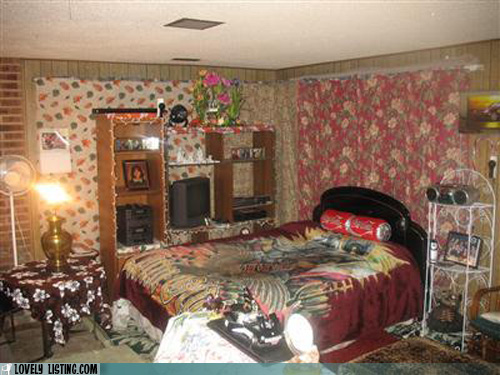
Make the house look better – Sometimes you have to spend money to make money. Take an objective look at your house, maybe it needs a paint job, some new counter tops or a replacement for the green shag carpet. I have nothing against green shag, I grew up with green shag. I love it, you love it but buyers DO NOT love it.
Do some staging – Maybe you have all the pieces, but they are all in the wrong places. A little staging goes a long way in making that all important first impression.
Make sure your curb appeal is the best on the block – Do some landscaping, buy some flowers, or this time of year make sure the snow is shoveled.
I get calls all the time asking for advice on whether it would be smart to do a particular remodeling project around their home. Many times it is tough for me to make the call for them. I look at houses all the time and see what buyers like but in most cases improvements don’t pay off right away. For instance according the Remodeling Magazine’s Cost vs. Value Report 2010-2011 a two story addition in the Denver area will cost $155,903 and give added resale value of $118,301. This means that an owner could expect to get about 76% of the value out of that project. Not exactly a strategy from the pages of Trump – The Way to the Top.
Okay, we have established that you won’t get back all of your money if you do a home project but what if that scares you into paralysis? Say you have owned your home for 15 years and during that time you have done nothing but change the filters in the furnace. This strategy, in my opinion works even worse than improving your home right before closing. In the case of the do-nothings, the value of their home will lag behind the neighborhood in general. Their home will stay on the market longer and in the end sell for a lower price. Again not a way to get rich quick.
I think the best strategy for maximizing the value of your home over time is to make incremental changes over time. Take on a project every six months or 1 year. For example, take a six month period to remove the old wallpaper and repaint. Next, re-do the powder room by removing the wall sized mirror and replace with a framed mirror and replace the lighting. Next re-tile the master bath. After a few years your house will start looking refreshed and will be one of the nicer ones on the block. And when you go to sell it you won’t have much to do to get maximum value. Also, you get to live in a much nicer home. Not just fix it up for someone else. There is value in that!
Here is a sample of the value of Midrange projects and their pay back in the Denver market:(ranked in order of pay back percentage):
Garage Door Replacement – cost $1,228 – cost recouped 93.1%
For copyright reasons I can’t display the report on my website but if you would like a copy of the full report which includes midrange and upscale projects and defines the scope of each please let me know. I can send you one if you request one to neil@neilkearney.com.


 To read that post click here. Today I’d like to talk about the sellers side of the real estate transaction.